| Archeology
and History
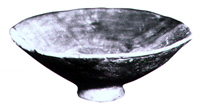 Archeological excavations undertaken on the
locations occupied by the present communal area have discovered great many objects from
ancient times of human history. Based on explorations and excavated objects it can be
taken for certain that this area was settled by people as early as in the fifth millennium
BC, which means in the later Neolithic. On the place where the present town of Becej is
located and its surroundings people were living for many ages BC Many traces of old
settlements from the Neolithic, Bronze and Iron Age have been found on this location, as
well as those from modern times. Archeological excavations undertaken on the
locations occupied by the present communal area have discovered great many objects from
ancient times of human history. Based on explorations and excavated objects it can be
taken for certain that this area was settled by people as early as in the fifth millennium
BC, which means in the later Neolithic. On the place where the present town of Becej is
located and its surroundings people were living for many ages BC Many traces of old
settlements from the Neolithic, Bronze and Iron Age have been found on this location, as
well as those from modern times.
 Sermatians settled this territory in the early period AD. Their traces have been found in
their settlements. Many tribes passed through this territory during the stormy years of
the Great Migration of People. They lived there for a while or longer and left their homes
and their graves behind them.
Sermatians settled this territory in the early period AD. Their traces have been found in
their settlements. Many tribes passed through this territory during the stormy years of
the Great Migration of People. They lived there for a while or longer and left their homes
and their graves behind them.
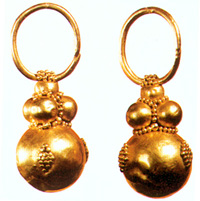
Most numerous are the traces left by Barbarians who lives
in this region form 6th to 9th century AD They often used to put rich presents in graves
of their deceased follows.
In the Middle Age there were several settlements on the
place where the present town is located and in its surroundings. Some of them disappeared
long time ago, others continued develop further to becomes modern towns of nowadays, such
as Becej, Backo Gradiste and Backo Petrovo Selo. The medieval settlements at Botra and
Perlek did not survive.
The Botra settlement from the medieval period was located
south of Becej. Traces have been found of many other settlements that were located in this
area in the period from 8th to 15th century. There are traces of a potter's shop from 11th
century, and the foundations of a church with a cemetery from 15th century are very well
preserved.
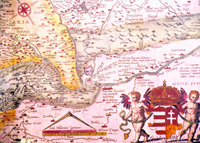 The medieval settlement of Perlek was located north of Becej. It was there as early as in
11th or 12th century. In old Turkish records it was mentioned in 1650 but it seems that in
1698 it was without any population. Archeological excavations have discovered a number of
structures from that period, e.g.: shelters made in ground, grain elevators, sewage pits,
water wells, trenches. The most valuable objects found on this location are now exhibited
in show room of the "Carbo-Dioxid" Works.
The medieval settlement of Perlek was located north of Becej. It was there as early as in
11th or 12th century. In old Turkish records it was mentioned in 1650 but it seems that in
1698 it was without any population. Archeological excavations have discovered a number of
structures from that period, e.g.: shelters made in ground, grain elevators, sewage pits,
water wells, trenches. The most valuable objects found on this location are now exhibited
in show room of the "Carbo-Dioxid" Works.
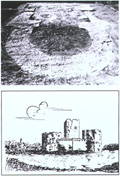 There are no medieval traces of the town of Becej. It is believed that they are hidden
deep below the present town and therefore difficult to be discovered.
There are no medieval traces of the town of Becej. It is believed that they are hidden
deep below the present town and therefore difficult to be discovered.
The town of Becej was first mentioned in the records from
1091, Backo Petrovo Selo in the records from 1092 and Backo Gradiste in 1316. Milesevo was
built up after the World War I and Radicevic after the World War II.
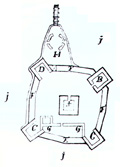
As a fortress Becej was mentioned in 1238, when the
Hungarian King Bela IV as a present gave it to crusading monks from the Throne City of
Belgrade. By the middle of 16th century the town of Becej had already changed a dozen of
feudal masters in the Feudal Hungarian Kingdom. In 1551 Mehmed Pasha Sokolovic, the famous
Turkish leader, conquered it. It remained in Turkish power until 1687.
 It was
Austria, which got power over this territory after the big war between Austria and Turkey
in late 17th century, which was ended by a peace treaty concluded in Sremski Karlovci in
1699. It was the time after the Great Migration of Serbs headed by Arsenije III
Carnojevic. Wishing to protect their empire from Turkish invasion the authorities of
Wienna set up a military border along the new frontiers. It was
Austria, which got power over this territory after the big war between Austria and Turkey
in late 17th century, which was ended by a peace treaty concluded in Sremski Karlovci in
1699. It was the time after the Great Migration of Serbs headed by Arsenije III
Carnojevic. Wishing to protect their empire from Turkish invasion the authorities of
Wienna set up a military border along the new frontiers.
Banat was lost by Turks after the war between Turkey and
Austria from 1716 to 1718 and the peace conclusion in Pozarevac in 1718. Thus the military
border in the area of Potisje was no longer needed. District authorities immediately
claimed abolishment of privileges that had been given to the border guard, which the guard
strongly opposed. In order to quiet the quard the authorities of Wienna established in
1751 the district of Potisje with the seat in Becej, which consisted of fourteen communes.
Within a century the district of Becej managed to develop handicrafts, trade and industry,
as well as other social activities to become now an administrative and cultural center of
the middle area of Potisje. The number of population has also gone up in the meantime: the
census from 1820 showed a figure of 8.357 inhabitants.
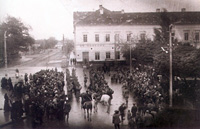 The district of Becej remained within the empire of Austria-Hungary until 1918, when it
became a part of the Kingdom of Serbs, Croats and Slovenians.
The district of Becej remained within the empire of Austria-Hungary until 1918, when it
became a part of the Kingdom of Serbs, Croats and Slovenians.
Industry began to develop in Becej between the two World
Wars. If employed about 1.500 industrial workers, and that figure will remain equally the
same in the years to come.
Becej was the main district town until 1955 when it became
a part of the district of Novi Sad. In 1965 it become the center of the Becej commune,
which was later joined by Backo Gradiste and Backo Petrovo Selo.This administrative
division is still present.
[Home Page] [Economy] [Education] [Culture and Sports]
[Cultural and Historical Monuments] [Tourism]
|
|